How to Keep Improving After Your Art Course Ends
Finishing an art course feels bittersweet. You've built momentum, made friends, and developed new skills. The thought of stopping can feel like falling off a cliff. But the end of structured classes is actually the beginning of independent artistic practice—and that's where real development accelerates.
Maintain a regular practice habit. The most important factor in artistic improvement is consistent practice. Aim for at least a couple of hours weekly, even if it's just thirty minutes several times a week. This regularity builds skills faster than occasional longer sessions. Your body and mind need regular repetition to internalise technique.
Set yourself loose projects. Without a tutor directing you, create your own challenges. Commit to drawing daily for a month, or painting a series exploring a single theme. These self-directed projects push you differently than structured lessons do and reveal what genuinely interests you artistically.
Join an open studio or life drawing group. Many Bristol studios host regular sessions where artists work independently but alongside others. Life drawing groups in particular are brilliant for developing observational skills. You get the motivation of community without formal instruction.
Take occasional advanced courses. Rather than continuous weekly classes, consider focused workshops on specific skills—perspective, colour mixing, portraiture. These intensive sessions deepen particular areas without requiring long-term commitment.
Study artists you admire. Spend time looking at work that excites you. Ask yourself why it works. Try to understand their technique by studying closely. Copying isn't cheating at this stage; it's how you internalise approaches that resonate with you.
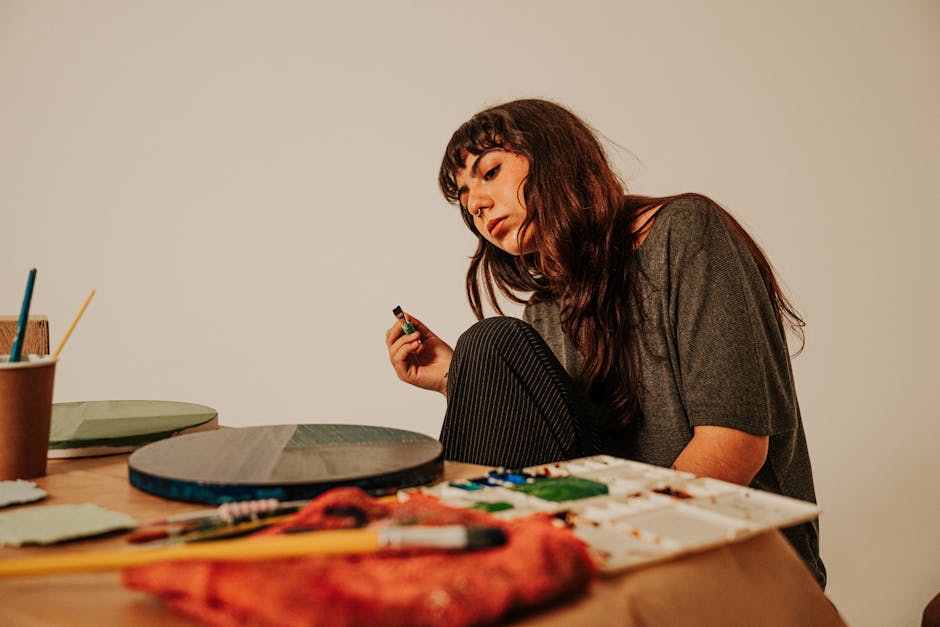
Create a dedicated workspace at home. You don't need a fancy studio. Even a corner of a table with supplies kept organised helps you practise more regularly. Friction matters—the easier it is to start, the more likely you'll actually do it.
Share your work and get feedback. Post work in progress online, join art social media communities, or attend open studio events. Feedback from other artists accelerates improvement. You learn what works and what doesn't from real responses to your work.
Don't compare your beginning to someone else's middle. You'll see amazing artists online and feel discouraged. Remember they've been practising for years. Compare yourself only to where you were six months ago.
Read about art and technique. Books, podcasts, and online articles deepen understanding between practical sessions. Knowing the theory behind what you're doing helps you solve problems independently.
Return to formal instruction when you hit a plateau. After independent practice, you might reach a point where you're stuck. That's the perfect time for another course or some one-to-one tuition. You'll get much more from it because you know what you need help with.
The transition from student to independent artist is natural and exciting. Your course gave you foundations and confidence. Now you build on them at your own pace, pursuing what genuinely fascinates you. That's where the real journey begins.